Blogs
Horse of Iron: Meaning, History, Symbolism, and Why the Iron Horse Still Matters


What Does “Horse of Iron” Mean?
The phrase “horse of iron” is best understood as a poetic variation of the much more established expression “iron horse.” In everyday historical usage, an iron horse refers to a locomotive, especially the steam-powered railway engines that transformed transportation during the nineteenth century. Merriam-Webster defines “iron horse” as a locomotive, particularly a steam locomotive, while major dictionary references trace the expression back to the early nineteenth century.
The image behind the phrase is simple but powerful. Before railways became dominant, horses were among the fastest and most dependable ways to move people, goods, mail, and military supplies across land. Then came the locomotive: a huge machine built from metal, powered by steam, and capable of pulling enormous loads over long distances. To people living through that technological change, a train must have seemed like a horse made of iron—strong, tireless, powerful, and able to travel along a fixed path with a force that no ordinary animal could match.
That is why horse of iron works so well as a literary image. It combines the familiar with the unfamiliar. A horse represents movement, energy, freedom, and power, while iron represents machinery, durability, industry, and human invention. Put those ideas together, and you get a symbol that feels almost alive: a mechanical beast charging across the landscape, carrying people toward a new future.
Why the Phrase Is Usually Connected to the Iron Horse
When people search for “horse of iron” they may be looking for a poetic phrase, a title, a creative expression, or an explanation of the better-known term “iron horse.” The two expressions are closely related in meaning, but “iron horse” is the historically established phrase used in dictionaries and historical writing. The term has also been used in literary, cultural, and historical contexts to describe the arrival of railroads and the powerful changes brought by industrial transportation.
The wording matters because language often grows through metaphor. People do not always name new inventions with technical descriptions alone. They compare unfamiliar things to objects they already understand. Early automobiles were sometimes called horseless carriages. A locomotive, meanwhile, could be imagined as an iron horse because it replaced many jobs once performed by real horses while offering a new level of speed and hauling power.
The phrase also carries an emotional quality that the simple word “locomotive” does not. A locomotive is a machine. An iron horse feels like a character. It suggests a powerful engine breathing smoke, pounding steel wheels against rails, and pulling a long train through mountains, plains, towns, and deserts. That is one reason the expression has survived as a symbol even though most people today simply say “train” or “locomotive.”
The Origins of the Iron Horse
The origins of the iron horse are closely tied to the development of rail transportation and steam power. In the early nineteenth century, railways were becoming an increasingly important part of industrial development, and steam locomotives offered a way to move far heavier loads than traditional horse-powered transport. Historical dictionary sources generally place the phrase’s early use in the 1820s and 1830s, with Merriam-Webster recording a first known use in 1840.
This was a period of enormous change. Factories were expanding, cities were growing, and businesses needed reliable ways to move coal, raw materials, manufactured goods, and passengers. Roads could be muddy, rough, and slow, while horse-drawn transportation required large numbers of animals, food, rest, and constant care. A steam locomotive offered something dramatically different: a machine that could work for long periods and pull many cars at once.
To modern readers, the comparison between a train and a horse may seem unusual. After all, one is an animal and the other is a machine. But for people living during the rise of railroads, the comparison made perfect sense. The horse was the familiar symbol of transportation, while the locomotive was the new challenger. Calling it an iron horse was a way of saying that technology had created a new kind of working animal—one made of metal and powered by engineering rather than muscle.
The Rise of Steam Locomotives
Steam locomotives became one of the defining technologies of the Industrial Revolution. They worked by using heat to create steam, which then helped power mechanical systems capable of turning wheels and moving heavy trains. The technology continued to develop over time, and locomotives became more efficient, more powerful, and more suitable for long-distance transportation.
The effect was enormous. A journey that once required days of travel by horse or wagon could become much faster by rail. Large quantities of goods could move between industrial centers, ports, farms, and growing cities. Railways also helped connect communities that had previously been separated by distance and difficult terrain.
The iron horse was not merely another vehicle. It became part of a new transportation system. Tracks created predictable routes, stations created new centers of activity, and timetables introduced a new way of thinking about distance and time. In many places, the railway changed the rhythm of daily life.
Why People Compared Locomotives to Horses
The comparison between a locomotive and a horse was not random. Horses had long been essential to transportation, agriculture, communication, and warfare. They could carry riders, pull wagons, transport supplies, and connect communities. When locomotives began performing similar tasks on a much larger scale, people naturally used the horse as a point of comparison.
The word iron added another layer of meaning. Iron was associated with strength, tools, machinery, bridges, weapons, factories, and the physical power of industrial society. A horse was alive and muscular; an iron horse was mechanical and unstoppable. The phrase therefore captured the feeling of a world moving from animal power toward machine power.
That transition was both exciting and unsettling. The iron horse promised faster travel and greater economic opportunity, but it also represented a society changing at remarkable speed. The old world of dirt roads, horse teams, and slow journeys was increasingly being joined—and sometimes replaced—by a world of steel rails, factories, schedules, and engines.
How the Iron Horse Changed Transportation
The arrival of the iron horse changed transportation by making long-distance movement faster, more predictable, and more efficient. Before railways expanded, the cost and difficulty of moving goods over land could limit where businesses operated and where communities developed. Rail transportation helped overcome many of those barriers.
A train could carry large amounts of cargo in a single journey. That made it easier for agricultural regions to send products to distant markets and for industrial centers to receive raw materials. Businesses could plan around railway routes, and towns located along major lines often gained new opportunities for trade and growth.
The change also affected ordinary travelers. A railway journey could connect people to cities, jobs, family members, education, and new experiences. Travel became more accessible to people who previously could not easily cross great distances. In this way, the iron horse helped make geography feel smaller.
Faster Travel and Expanding Trade
The economic effect of railways was especially significant. Markets that had once been isolated could become connected through regular rail service. A farmer could potentially reach a larger market, a manufacturer could obtain materials from farther away, and a city could receive goods from distant regions.
The railway also created a network effect. One railway line could be useful, but a connected system of lines could transform an entire region. As tracks expanded, transportation became increasingly integrated. Goods could move from rural areas to towns, from towns to cities, and from cities to ports.
This is one reason the iron horse became such a powerful symbol of progress. It did not simply move from one place to another. It helped reshape the relationships between places. A remote location could become economically important if a railway reached it. A small settlement could grow into a major town. A business could expand because transportation costs and travel times changed.
The Iron Horse and the American Railroad
The phrase iron horse is strongly connected with the history of railroads in the United States. During the nineteenth century, railway expansion played a major role in connecting regions and supporting economic development. Railroads crossed difficult terrain and linked communities that had previously been separated by enormous distances.
The railway was also part of a much larger story involving immigration, labor, industrial growth, westward expansion, trade, and national development. The image of the iron horse moving across the landscape became one of the strongest symbols of the age.
But the history of railroads is complex. The expansion of railways created opportunities and connected communities, while also bringing conflict, displacement, environmental change, and serious human costs. A strong article about the iron horse should recognize both sides of that history rather than presenting industrial expansion as a simple story of progress.
The Transcontinental Railroad
One of the most famous chapters in railroad history was the construction of the first transcontinental railroad in the United States. The project connected the Union Pacific and Central Pacific railroads, with the historic joining of the lines at Promontory Summit, Utah, in 1869.
The event became a powerful symbol of national connection. A journey across the country that had once been extremely difficult could now be completed through a growing railway network. The railroad also helped accelerate trade, migration, communication, and settlement.
The story has been remembered in books, museums, films, documentaries, and popular culture. It also deserves careful historical treatment because the construction and expansion of railroads involved the labor of many groups, including Chinese workers who played a major role in building the Central Pacific Railroad. The story of the iron horse is therefore not just a story about machines. It is also a story about the people who built, operated, used, and were affected by the railway system.
The Lasting Cultural Impact
The railroad became more than a method of transportation. It became part of the cultural imagination. The sound of a train whistle, the sight of smoke rising above the horizon, and the image of steel wheels moving through the wilderness all became powerful symbols in American storytelling.
The 1924 silent film The Iron Horse, directed by John Ford, helped cement the phrase in popular culture. The film dramatized the building of the first transcontinental railroad and became an important early western. The film’s centennial was widely discussed in 2024, with commentary highlighting its role in establishing Ford’s reputation and its influence on later western filmmaking.
This cultural legacy explains why the iron horse still feels larger than a dictionary definition. It represents adventure, danger, ambition, engineering, migration, and the transformation of the American landscape.
Horse of Iron as a Symbol of Progress
The phrase horse of iron can also be used symbolically. It can represent any powerful force that carries society forward through technology, industry, or human invention. In that sense, the phrase does not have to refer only to a literal steam locomotive.
Think of it as a metaphor for a machine that changes the direction of history. The original iron horse transformed transportation. Other technologies have done something similar in later eras. Cars, airplanes, computers, and digital networks have each changed how people move, work, communicate, and live.
The metaphor remains effective because it combines power with motion. An iron horse is not sitting still. It is moving forward. It suggests momentum, ambition, and the feeling that once a major technological change begins, society may never return to exactly what came before.
Strength, Speed, and Industrial Power
Iron has long represented durability. A horse represents energy and movement. Together, the two ideas create a memorable image of strength in motion. That is why the expression works so well in titles, essays, poems, films, and historical writing.
If someone uses “horse of iron” in a creative context, the phrase may suggest a machine that is powerful but not necessarily gentle. Industrial progress can carry people forward, but it can also reshape landscapes and communities. The metaphor can therefore be used positively, negatively, or with a sense of mystery.
For SEO content, this gives the keyword horse of iron several useful semantic connections. Related terms include iron horse meaning, what is an iron horse, steam locomotive history, railroad history, industrial revolution transportation, horse of iron symbolism, and the history of locomotives. These related keywords help search engines understand the subject more clearly while giving readers a more complete explanation.
The Iron Horse in Movies, Literature, and Popular Culture
The iron horse has appeared repeatedly in popular culture because trains naturally create dramatic stories. A train can be a symbol of escape, arrival, separation, progress, danger, or destiny. It can carry a character toward a new life or away from an old one.
The expression has also appeared in poetry and literature. Writers often use trains as symbols of industrial change and the tension between nature and technology. A locomotive moving through a quiet landscape can represent the arrival of a new era, sometimes with excitement and sometimes with unease.
Films have used the railway as a setting for westerns, thrillers, romances, historical dramas, and adventure stories. The train is visually powerful because it has movement, sound, scale, and direction. It is a machine that seems to have its own personality.
The Legacy of The Iron Horse
John Ford’s The Iron Horse remains particularly important because it connected railroad history with the visual language of the western. The film helped establish Ford as a major director and contributed to the mythology surrounding the expansion of railroads across the American West. Modern discussions of the film also emphasize its historical importance in the development of the western genre and its large-scale production.
Although historical films should always be viewed critically, their influence can be enormous. A movie can shape how generations imagine the past. In the case of The Iron Horse, the railroad became part of a grand cinematic story about determination, engineering, conflict, romance, and national expansion.
That is the power of a phrase like horse of iron. It can begin as a description of a machine and eventually become part of a much larger story about human ambition.
Why the Phrase Still Captures the Imagination
Why does iron horse still sound memorable when modern people rarely use it in ordinary conversation? The answer may be that the phrase gives personality to technology. “Locomotive” tells us what the machine is. “Iron horse” tells us how people felt about it.
The phrase suggests wonder. Imagine living in a time when most long-distance travel depended on animals, wagons, boats, or walking. Then imagine seeing a massive machine arrive, breathing smoke and steam, making thunderous noise, and pulling an entire line of carriages behind it. Calling that machine an iron horse would feel natural.
The phrase also survives because it represents a universal human experience: the arrival of something new that changes the world. Every generation encounters technologies that seem almost unbelievable at first. The iron horse was one of those technologies.
Today, the phrase can still be used in historical writing, creative writing, branding, poetry, and storytelling. It carries a strong visual image and has clear connections to transportation, industry, progress, and the transformation of society.
For anyone writing an article targeting the keyword horse of iron, the best approach is to explain the phrase clearly while also covering the broader concept of the iron horse. This creates a useful article for readers who may be searching for the exact phrase, a definition, historical background, symbolism, or information about railroads.
Conclusion
The phrase horse of iron is a powerful way to imagine the machine that changed transportation and helped reshape modern society. While iron horse is the more established historical expression for a locomotive, the idea behind both phrases is closely connected: a powerful mechanical force that replaced many traditional transportation roles once performed by real horses.
From the rise of steam locomotives to the expansion of railroads across continents, the iron horse represented speed, strength, industrial power, and dramatic social change. It moved goods, carried passengers, connected distant communities, and became a symbol of an age when technology began transforming everyday life at an extraordinary pace. Its story is also connected to complex histories involving labor, migration, expansion, conflict, and cultural change.
Even now, the image remains unforgettable. A horse of iron is more than a train. It is a symbol of movement and progress—a reminder that some inventions do not simply improve life; they change the way people imagine distance, time, opportunity, and the future.
Frequently Asked Questions
1. What does “horse of iron” mean?
Horse of iron is generally understood as a poetic variation of iron horse, a historical term used to describe a locomotive, especially a steam locomotive. The phrase compares the strength and movement of a horse with the durability and mechanical power of iron.
2. Why is a train called an iron horse?
A train was called an iron horse because it performed many transportation tasks traditionally associated with horses while being made primarily from metal and powered by mechanical energy. The phrase became associated with the rise of railroads during the nineteenth century.
3. When did the term “iron horse” first appear?
Historical dictionary sources trace the phrase to the early nineteenth century, with origins commonly associated with the 1820s and 1830s. Merriam-Webster lists 1840 as the first known use of the term in its modern dictionary record.
4. Is “horse of iron” the same as “iron horse”?
The meanings are closely related, but iron horse is the established historical expression. Horse of iron is a more poetic or creative wording that can refer to the same basic image: a powerful machine, especially a locomotive, imagined as a horse made of metal.
5. What does the iron horse symbolize?
The iron horse commonly symbolizes progress, industrialization, speed, strength, transportation, and technological change. It can also represent the way inventions transform landscapes, economies, communities, and everyday life.

The Nissan Armada 2024 remains one of Nissan’s largest and most capable SUVs, combining traditional body-on-frame construction, a powerful V8 engine, three-row seating and substantial towing capability. For buyers who want an SUV that can handle family transportation during the week and towing or outdoor adventures on the weekend, the 2024 Armada offers a distinctive alternative to competitors such as the Chevrolet Tahoe, Ford Expedition, Toyota Sequoia and GMC Yukon. Rather than moving entirely toward smaller turbocharged engines, Nissan continued with a naturally aspirated 5.6-liter V8 producing 400 horsepower and 413 lb-ft of torque, paired with a seven-speed automatic transmission. The 2024 model also offered rear-wheel drive or four-wheel drive depending on configuration, giving shoppers a choice between traditional rear-drive performance and additional traction for challenging roads and off-road conditions.
The 2024 Nissan Armada is particularly interesting because it represents the final model year of this generation before Nissan introduced a substantially redesigned Armada for 2025. For 2024, Nissan made relatively few changes, with the most notable lineup change being the removal of the previous base S trim, leaving the SV as the entry point. That means shoppers looking at a used 2024 Armada can find a vehicle with a mature design, strong V8 performance and a broad selection of standard and available equipment without purchasing an entirely new-generation SUV. However, the Armada’s strengths also come with compromises, particularly fuel consumption, third-row space and some aspects of its aging technology.
2024 Nissan Armada Overview
The Nissan Armada is designed for people who need more capability than a typical crossover can provide. Its body-on-frame architecture gives it the basic mechanical foundation associated with traditional full-size SUVs and pickup trucks, while independent suspension helps provide a more comfortable ride than the old truck-like SUVs of decades past. The result is a vehicle that feels substantial on the road and can tow up to 8,500 pounds when properly equipped. Nissan’s official specifications list the same maximum towing figure for the 2024 Armada, making towing one of the SUV’s strongest selling points.
For 2024, the Armada was available in several trim levels, including SV, SL, Platinum and the rugged-looking Platinum Reserve. Depending on configuration, buyers could choose between seating for seven with second-row captain’s chairs or seating for eight with a second-row bench. This flexibility makes the Armada useful for both large families and buyers who prioritize easier access to the third row. Nissan’s brochure lists 41.9 inches of front-row legroom and 41.0 inches in the second row, while third-row legroom is more limited at 28.4 inches. Consequently, the first two rows are considerably better suited to adults than the rearmost seats.
Nissan Armada 2024 Engine and Performance
One of the biggest reasons to consider the Nissan Armada 2024 is its engine. Under the hood is a 5.6-liter naturally aspirated V8 producing 400 horsepower at 5,800 rpm and 413 lb-ft of torque at 4,000 rpm. The engine is connected to a seven-speed automatic transmission. This combination gives the Armada strong acceleration for a vehicle of its size and makes it particularly well suited to towing and highway driving. The V8 also provides a traditional large-engine character that differentiates the Armada from newer competitors that increasingly rely on smaller turbocharged engines or hybrid powertrains.
On the road, the Armada’s V8 provides plenty of power for merging onto highways, passing slower traffic and carrying passengers with a full load of luggage. Independent testing from Edmunds recorded a 0-to-60-mph time of 6.7 seconds for a tested 2024 Armada, demonstrating that this large SUV is not particularly slow despite its size and weight. The steering and handling are less impressive than the engine, with reviewers noting that the Armada can feel dated compared with some newer full-size SUVs. Still, its smooth power delivery and quiet highway cabin make it well suited to long-distance travel.
Nissan Armada Towing Capacity
For many buyers, Nissan Armada towing capacity is more important than acceleration or fuel economy, and this is an area where the 2024 model performs strongly. The Armada can tow up to 8,500 pounds when properly equipped, and Nissan lists an 850-pound maximum tongue weight. That makes the SUV suitable for many boats, recreational trailers, utility trailers and other substantial loads, although buyers should always check the exact vehicle configuration, trailer weight and applicable towing requirements before towing.
The Armada’s towing ability is helped by its V8 engine and body-on-frame platform. The available four-wheel-drive system adds additional traction when driving on slippery surfaces, gravel roads or other challenging terrain. Another useful feature is the trailer brake controller available as standard equipment across the 2024 lineup according to Edmunds, allowing the driver to adjust trailer braking from inside the vehicle. For someone who regularly tows, these details can make the Armada more appealing than a typical crossover SUV.
2024 Nissan Armada Fuel Economy and MPG
Fuel economy is one of the clearest compromises associated with the Nissan Armada 2024. A large SUV weighing thousands of pounds and powered by a 5.6-liter V8 is never going to match the efficiency of a smaller crossover. Nissan’s official EPA estimates give the rear-wheel-drive Armada ratings of approximately 14 mpg city, 19 mpg highway and 16 mpg combined. Four-wheel-drive versions are rated at approximately 13 mpg city, 18 mpg highway and 15 mpg combined.
These figures should be considered carefully by buyers who drive many miles every year. The Armada’s 26-gallon fuel tank provides useful range between fill-ups, but frequent urban driving or heavy towing can make fuel costs significant. On the positive side, the V8 provides strong performance without requiring a turbocharger, and the Armada can run on regular unleaded fuel, although premium fuel is recommended for maximum performance. For shoppers who value towing, passenger capacity and V8 power more than fuel efficiency, the trade-off may be reasonable.
Nissan Armada 2024 Interior and Comfort
Inside, the Nissan Armada 2024 interior has a premium appearance in its higher trims and provides generous space for passengers in the first two rows. Available features include leather seating, heated and ventilated front seats, power-adjustable seats, a Bose audio system and other comfort-focused equipment. The upper trim levels move the Armada closer to a luxury-SUV experience without reaching the price and positioning of Nissan’s Infiniti QX80 sibling.
Passenger space is one of the Armada’s practical advantages, particularly in the first and second rows. Nissan lists 63.8 inches of front shoulder room and 63.4 inches in the second row, along with more than 41 inches of legroom in both rows. However, the third row is not as spacious for adults because third-row legroom measures 28.4 inches. The third row is therefore more appropriate for children or shorter passengers, especially during longer journeys.
Cargo capacity is another consideration. With all three rows in use, the Armada offers about 16.5 cubic feet of cargo space according to Edmunds. Folding the rear seats dramatically increases available room, with maximum cargo capacity listed at approximately 95.4 cubic feet. This makes the Armada considerably more versatile when the third row is not required. Families can use it as a three-row people mover on one day and fold the rear seating when transporting larger objects on another.
Nissan Armada 4WD Capability
The Nissan Armada 4WD system gives the SUV additional capability for buyers who frequently encounter snow, mud, loose surfaces or rough roads. Four-wheel drive is available across the 2024 range, and the system includes low-range gearing, which is particularly useful in demanding off-road situations or when additional low-speed control is required. Ground clearance is around 9.2 inches in one documented configuration, while the body-on-frame platform provides a solid foundation for light off-road adventures.
It is important, however, to understand that buying a four-wheel-drive Armada does not automatically turn it into a dedicated rock-crawling vehicle. Tire choice, driver experience, terrain and vehicle configuration all influence off-road performance. For owners who primarily drive paved roads but occasionally travel on dirt, gravel, snow or poorly maintained surfaces, the available 4WD system can provide useful additional capability without requiring a specialized off-road vehicle.
Technology and Safety Features
The 2024 Armada includes a substantial collection of driver-assistance and safety technologies. Depending on configuration, features include automatic emergency braking, lane-departure warning, lane-keeping assistance, blind-spot monitoring and rear cross-traffic alert. Edmunds also lists driver attention monitoring and other active safety equipment among the available or standard features.
Technology is one area where the 2024 Armada can show its age compared with newer competitors. Automotive reviewers have noted that some aspects of its infotainment system and interior technology feel dated. Nevertheless, the upper trims offer a strong collection of convenience and entertainment features, and the overall cabin can feel comfortable and upscale. Buyers shopping for a used Armada should inspect the infotainment system, cameras, driver-assistance functions and electronic equipment carefully during a test drive.
2024 Nissan Armada Trim Levels
The 2024 Nissan Armada lineup gives buyers several different approaches to the same basic V8-powered SUV. The SV serves as the entry point after Nissan discontinued the S trim for 2024 and already includes a useful level of equipment. The SL moves further toward premium territory with additional comfort and technology features and is considered by Edmunds to offer one of the better balances between equipment and price.
The Platinum trim focuses heavily on luxury, with more premium interior materials and additional convenience equipment. At the top of the range, the Platinum Reserve adds further upscale touches and styling. When shopping used, it is worth comparing the equipment on individual vehicles rather than choosing solely by trim name because optional packages and drivetrain choices can significantly affect what a particular Armada includes.
Is the 2024 Nissan Armada Good for Families?
For families that need three rows, substantial towing ability and a large cargo area, the Armada can be an attractive choice. The first two rows offer generous passenger room, while the third row provides additional seating when needed. The available eight-passenger configuration can be especially useful for large families, while captain’s chairs provide a more comfortable and accessible second-row arrangement for buyers who do not need maximum passenger capacity.
The Armada is also well suited to road trips because of its comfortable front seats, quiet highway cabin and strong engine. However, families should consider the relatively limited third-row legroom and the small amount of cargo space left behind the third row. If all three rows are occupied on a regular basis and the family also carries a large amount of luggage, a larger SUV or a vehicle with a more spacious third-row cargo area may be worth considering.
2024 Nissan Armada Pros and Cons
The biggest 2024 Nissan Armada pros include its powerful 400-horsepower V8, strong 8,500-pound towing rating, available four-wheel drive, comfortable first two rows and generally upscale upper trims. The Armada also has a relatively distinctive presence because it is less common than some of the segment’s most recognizable competitors. For buyers who specifically want a traditional V8-powered full-size SUV, it remains an appealing option.
The disadvantages are primarily related to efficiency and age. Fuel economy is poor compared with smaller SUVs, the third row is not especially spacious for adults, and some technology and driving characteristics feel older than those of newer competitors. The Armada’s size can also make parking and maneuvering in tight urban environments more difficult. Buyers should therefore focus on their priorities rather than assuming that a large SUV is automatically the best choice for every family.
Is the Nissan Armada 2024 Worth Buying?
Whether the Nissan Armada 2024 is worth buying depends heavily on what you need from an SUV. If your priorities include a powerful V8, strong towing capacity, three-row seating, available 4WD and a comfortable highway ride, the Armada makes a compelling case. Its 400 horsepower and 8,500-pound towing capability give it genuine utility rather than simply offering the appearance of ruggedness.
On the other hand, buyers who prioritize fuel economy, the latest infotainment technology, exceptional third-row space or the newest driving dynamics may find newer competitors more appealing. The fact that the 2024 model belongs to the outgoing generation can actually be a benefit for used-car shoppers who prefer proven mechanical components and potentially lower purchase prices, but the vehicle should still be inspected carefully for maintenance history, accident damage, tire condition and the operation of all electronic features before purchase.
Conclusion
The Nissan Armada 2024 is a traditional full-size SUV with a clear identity. Its 5.6-liter V8, 400 horsepower, available four-wheel drive and 8,500-pound towing capacity make it substantially more capable than an ordinary family crossover, while its three-row cabin and premium upper trims give it enough comfort for everyday family use. Official Nissan specifications confirm its impressive towing capability, seating flexibility and substantial dimensions, while independent reviews highlight the smooth V8 power, quiet cabin and strong towing performance as some of its most important advantages.
The trade-off is fuel consumption and an aging overall package. The Armada is not the most efficient full-size SUV, its third row is best suited to smaller passengers, and some competitors offer newer technology and more polished driving characteristics. Nevertheless, for buyers searching specifically for a 2024 Nissan Armada with V8 power, serious towing ability and traditional SUV construction, it remains an interesting choice. Anyone considering a used example should compare trim levels, drivetrain configurations, service history and overall condition before making a purchase. When those factors line up with the buyer’s needs, the 2024 Armada can deliver the combination of strength, space and long-distance comfort that many large-SUV shoppers are looking for.
Frequently Asked Questions About the Nissan Armada 2024
Is the 2024 Nissan Armada a good SUV?
Yes, the 2024 Nissan Armada can be a good SUV for buyers who prioritize V8 power, towing capability, three-row seating and available four-wheel drive. Its main weaknesses are fuel economy, third-row space and aging technology. Edmunds rated the 2024 model 7.1 out of 10 in its expert testing.
How much can the 2024 Nissan Armada tow?
The 2024 Nissan Armada can tow up to 8,500 pounds when properly equipped. Nissan’s specifications also list an 850-pound maximum tongue weight.
How much horsepower does the Nissan Armada 2024 have?
The 2024 Armada’s 5.6-liter V8 produces 400 horsepower and 413 lb-ft of torque. It is paired with a seven-speed automatic transmission.
What is the 2024 Nissan Armada MPG?
Rear-wheel-drive versions are rated at approximately 14 mpg city, 19 mpg highway and 16 mpg combined. Four-wheel-drive versions are rated at approximately 13 mpg city, 18 mpg highway and 15 mpg combined.
Does the 2024 Nissan Armada have 4WD?
Yes. Four-wheel drive is available on the 2024 Nissan Armada, and the system includes low-range gearing for additional capability in challenging conditions.
How many people can the 2024 Nissan Armada seat?
The Armada can seat up to eight people with a second-row bench seat. With the available second-row captain’s chairs, seating capacity is reduced to seven.
Is the Nissan Armada 2024 good for towing?
Yes. Its 8,500-pound maximum towing rating and powerful V8 engine make towing one of its strongest capabilities. Edmunds also notes that the 2024 model includes a trailer brake controller across the lineup.
How much cargo space does the 2024 Armada have?
The Armada provides approximately 16.5 cubic feet of cargo space behind the third row, while maximum cargo capacity is approximately 95.4 cubic feet with the rear seating folded.
What changed for the 2024 Nissan Armada?
The biggest lineup change for 2024 was the removal of the base S trim. The rest of the model largely carried over from the previous year, as the current generation had already received a significant refresh for 2021.
Is the 2024 Nissan Armada fuel efficient?
Fuel economy is not one of the Armada’s strongest qualities. Its large size and naturally aspirated V8 result in EPA combined ratings of 16 mpg for rear-wheel-drive models and 15 mpg for four-wheel-drive models.
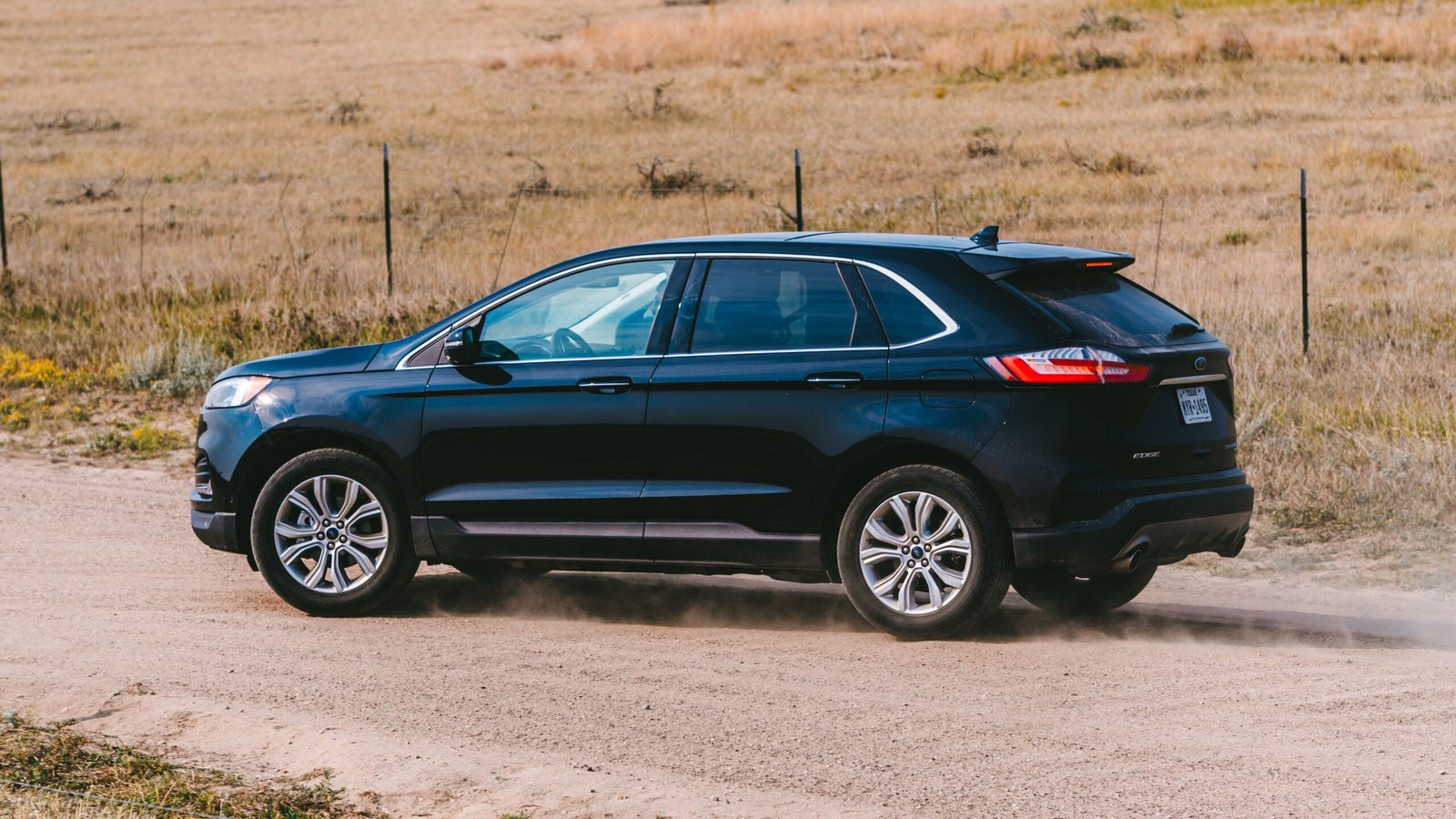


2024 Nissan Armada: Complete Guide to Specs, Features, Towing, MPG and Price

Ford Edge AWD: Complete Guide to Performance, Features, Benefits, and Buying Tips

How I Walk in Heels: A Complete Beginner’s Guide to Walking Confidently

3F Epic Seven Guide (2026): Best Heroes, Builds, Uses, Counters, and Everything You Need to Know

Steven Cauble Pastor: Biography, Ministry, Family, Career, and Life Beyond the Spotlight

How to Make Ginger Tea for Cold: A Complete Guide to Natural Relief
 Tech3 months ago
3F Epic Seven Guide (2026): Best Heroes, Builds, Uses, Counters, and Everything You Need to Know
- Lifestyle3 months ago
Steven Cauble Pastor: Biography, Ministry, Family, Career, and Life Beyond the Spotlight
- Health3 months ago
How to Make Ginger Tea for Cold: A Complete Guide to Natural Relief
- Tech3 months ago
Best Free Photo Editing App for iPhone: 12 Amazing Apps to Transform Your Photos in 2026
- Tech3 months ago
How to Get More Instagram Followers Fast: 20 Proven Strategies to Grow Organically in 2026
- Lifestyle3 months ago
Neil Joseph Tardio Jr.: Biography, Career, Family, Net Worth, and Everything You Should Know
- Health3 months ago
How to Stop Stomach Pain Fast at Home
- Tech3 months ago
Phone Battery Draining Fast Overnight? Causes, Fixes, and Proven Ways to Make Your Battery Last Longer